- August 15, 2026
- By Tess
- In Diesel, turbocharger
- Tags Diesel Engine, Diesel Engine Maintenance, turbocharger
- 61
- 0
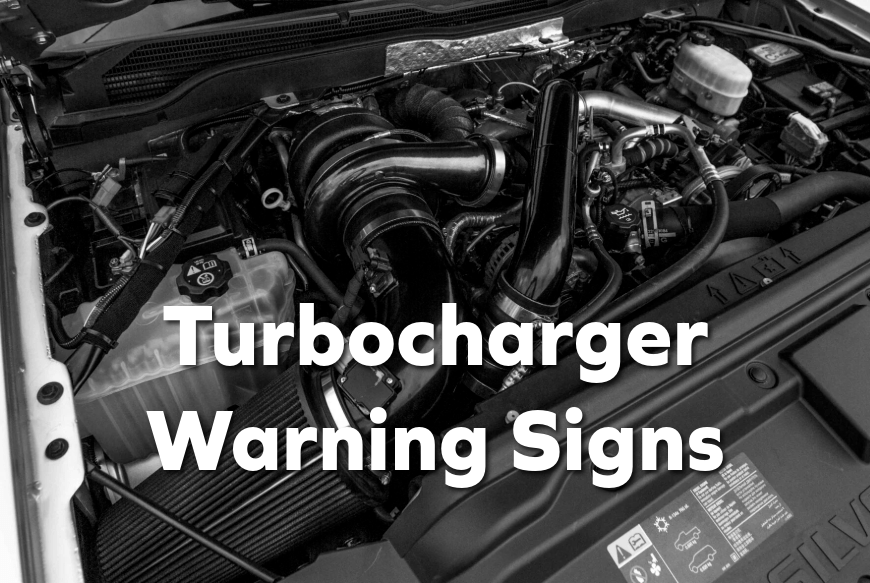
You’re loaded up and pulling a trailer out on a cold morning, and the truck just feels flat. The power that was there last week is gone, and there’s a faint whine coming from under the hood. Nine times out of ten, that combination points at the turbocharger.
For diesel owners in Iowa, a healthy turbo is the difference between a truck that pulls strong and one that struggles under load. When it starts to go, catching it early is what keeps a repair from turning into a much bigger bill. Here’s how to read the warning signs and understand when diesel turbocharger repair makes sense versus a full replacement.
In plain terms, a turbocharger forces extra air into the engine so it can burn more fuel and make more power. It’s driven by your exhaust, spinning a shaft at incredibly high speed to pack that air in.
Because it spins so fast and runs so hot, the turbo takes a beating over the miles. On a hard-working diesel that tows, hauls, or sees a lot of stop-and-go, it’s one of the parts we keep a close eye on.
A turbo rarely quits all at once. It usually gives you a heads-up first. Watch for:
Any one of these is worth looking into. Two or more together, and it’s time to get the truck on a lift.
This is the question every owner asks, and the honest answer is that it depends on what actually failed. A turbo is a system, not a single part, so we diagnose before we quote.
Diesel turbocharger repair often makes sense when the core of the turbo is still healthy and the problem is a supporting component:
Full replacement is usually the smarter call when the turbo’s core is damaged:
Sometimes the turbo itself is fine and the real culprit is a clogged air filter, a failed sensor, or a boost leak somewhere else. That’s why we start with diagnostics instead of throwing parts at it.
Most turbo failures trace back to a handful of causes. Knowing them helps you protect the next one:
Staying on top of oil changes with the right oil is the single best thing you can do for turbo life.
A failing turbo isn’t just a power problem. When seals let go, oil can get pulled into the intake, and on a diesel that can lead to a dangerous runaway condition where the engine feeds on its own oil. Debris from a coming-apart turbo can also travel downstream and damage other expensive parts.
If you’re seeing the warning signs above, this is one to have checked sooner rather than later. It’s a safety issue as much as a repair bill, so don’t put off a professional inspection.
Our latest diagnostic tools let us measure actual boost, pull the codes, and pin down whether you’re looking at a repair or a replacement before any parts come off. We use OEM and high-performance parts depending on your truck and how you use it, whether that’s a daily driver, a work truck, or a built rig.
You get quality work with a local shop that will actually walk you through what we found and why it matters. Whether you drive a Powerstroke, a Cummins, or a Duramax, the goal is the same: get your turbo sorted right the first time so you’re back to pulling strong.
Think your turbo might be on the way out? Start here: Truck & Diesel Service.
Call Beyer Motorsports at (319) 277-7551 or stop by 3800 South Hudson Road, Cedar Falls, IA. We’re open Monday through Friday, 8:00am to 5:30pm.
Catch it early, and we’ll keep it from becoming a bigger problem.


